Music • Images

Video art
This section presents a selection of experimental video works created between 1987 and 1991, shortly after graduating from the ArtEZ University of the Arts Arnhem. Although these works belong to an earlier period of my artistic practice, many of the ideas and questions they explore continue to occupy me today as a composer.
The original tapes have largely been lost. The versions presented here are the only surviving copies and inevitably reflect the analogue recording and transfer processes through which they have been preserved.

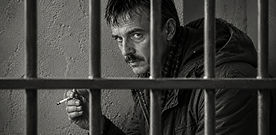
Miranda (1987)/ Miranda #83 (2026)
For this video, I created a series of large-scale graphite drawings (100 × 80 cm) and cut-out drawings mounted on cardboard to create depth, combining these with simple set pieces and live action. Set designer Michiel Vijselaar even built a small cemetery in my backyard specifically for the shoot.
The starting point was a phone call from my sister suggesting that the family should clean our mother's grave. I remember being completely flabbergasted.
For a moment, I could only picture us arriving with buckets, brushes and scouring cream, as if we were about to clean a kitchen rather than visit a grave.
Almost immediately, I imagined it as the premise for a Hitchcock-like story: a man visits his late wife's grave at night to clean it, only to be mistaken for a grave vandal.
The soundtrack was composed on an Ensoniq Mirage sampler, borrowed from a friend for only a short time. Because of this limitation, I performed the music live, recording and improvising directly onto a four-track Tascam cassette recorder. Any mistake meant starting the entire performance over again.
NOTE: Unfortunately the original videotapes have been lost. This digitized FLV file is the only surviving version of the work. Its image and sound quality inevitably reflect the successive analogue and digital transfers through which it has been preserved.

Listen to these 5 original tracks :


When I was young, my father made me go to church with him. Upon entering the church, I would hear this kind of organ music. Like all my music, this piece was written purely from memory and is not a literal reconstruction of what I heard.
I began this piece with the grandeur of an organ with all its stops pulled out, and with something like ‘Here Comes the Bride’ in mind. At the end, however, there is no triumphant resolution: the piece ends on a Cmaj9 chord, leaving the music in a more open, ambiguous place.
This piece was ultimately not used in the video. The priest sings a phrase, after which the congregation responds and continues singing. This memory was translated quite literally and did not work as film music: the music was simply too grand for the moment when the man enters the church.
The dramatic theme is played three times, with slight variations. Here too, we hear a subtle question-and-answer structure. What strikes me now is that I would never repeat the same pattern three times in a row anymore. But then again, why not?


Three years after 'Miranda', I made another video, 'Billy', using drawings and small, handmade set pieces. The starting point was the line ‘Flowers for Mama, but it’s not Mother’s Day’ from George Jones’s country tearjerker Flowers for Mama. That ‘but it’s not Mother’s Day’ especially intrigued me: in just a few words, an innocent image, flowers for Mama, suddenly becomes the beginning of a story.
Because if it isn’t Mother’s Day, why the flowers?
So I made up this bizarre little story around it: in all his childhood innocence, little Billy picks a bunch of flowers that the neighbour has just sprayed with a highly toxic insecticide and gives them to his already terminally ill mother...
Yes, childhood memories and death are recurring themes in almost all my work. My friend Bernard Jongstra and I developed the music together, inspired by Bernard Herrmann’s theme from Alfred Hitchcock's Vertigo. Everything was done with a big wink to the great Hollywood movies.
This too was still made using the Atari and the Ensoniq Mirage. The voice acting for Billy was done by art-students from the United States and Australia, who happened to be in Arnhem for a video festival at the time.

Don't Talk Now (1993)
Combining documentary footage, staged scenes, voice-over and early computer animation created on a Commodore Amiga, the work explores language, communication and the act of expression itself.
The video opens with a fragment from a documentary about my work that was made around that time, in which I struggle to say the Dutch sentence: "Ik wil zo graag 's een keer iets écht zeggen." Rather than translating it literally, the English voice-over simply says: "So I would just like to say something once." Looking back, I realize that this sentence reaches far beyond its literal meaning. What once referred to speaking has gradually come to reflect a question that still accompanies me as an artist.
Note: The original tapes have been lost. This digitized FLV file is the only surviving version of the work. Its image and sound quality inevitably reflect the analogue recording and the successive transfer process through which it has been preserved.